Friday, April 17, 2009

King Midas

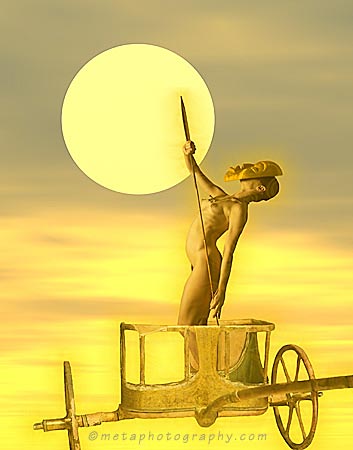
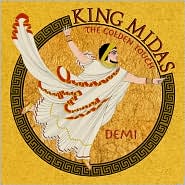
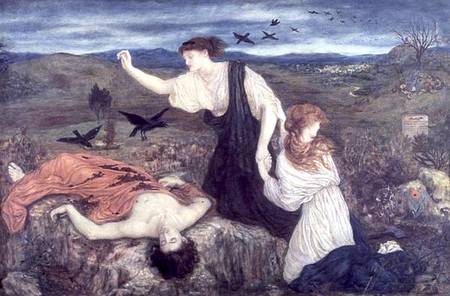
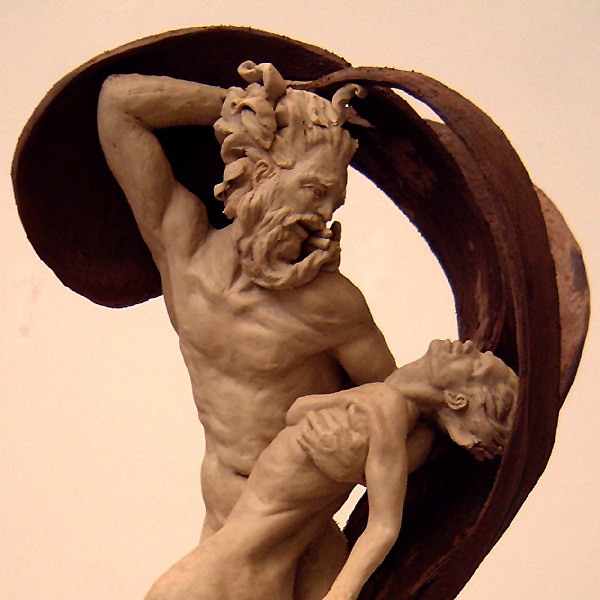
Bacchus, on a certain occasion, found his old school master and foster father, Silenus, missing. The old man had been drinking, and in that state had wandered away, and was found by some peasants, who carried him to their king, Midas. Midas recognized him, and treated him hospitably, entertaining him for ten days and nights with an unceasing round of jollity. On the eleventh day he brought Silenus back, and restored him in safety to his pupil. Whereupon Bacchus offered Midas his choice of whatever reward he might wish. He asked that whatever he might touch should be changed into GOLD. Bacchus consented, though sorry that he had not made a better choice. Midas went his way, rejoicing in his newly acquired power, which he hastened to put to the test. He could scarce believe his eyes when he found that a twig of an oak, which he plucked from the branch, became gold in his hand. He took up a stone it changed to gold. He touched a sod it did the same. He took an apple from the tree you would have thought he had robbed the garden of the Hesperides. His joy knew no bounds, and as soon as he got home, he ordered the servants to set a splendid repast on the table.
Then he found to his dismay that whether he touched bread, it hardened in his hand; or put a morsel to his lips, it defied his teeth. He took a glass of wine, but it flowed down his throat like melted gold.

In consternation at the unprecedented affliction, he strove to divest himself of his power; he hated the gift he had lately coveted. But all in vain; starvation seemed to await him. He raised his arms, all shining with gold, in prayer to Bacchus, begging to be delivered from his glittering destruction.
Bacchus, merciful deity, heard and consented. "Go," said he, "to the river Pactolus, trace the stream to its fountain-head, there plunge in your head and body and wash away your fault and its punishment." He did so, and scarce had he touched the waters before the gold-creating power passed into them, and the river sands became changed into GOLD, as they remain to this day.

Thenceforth Midas, hating wealth and splendor, dwelt in the country, and became a worshipper of Pan, the god of the fields. On a certain occasion Pan had the temerity to compare his music with that of Apollo, and to challenge the god of the lyre to a
trial of skill. The challenge was accepted, and Tmolus, the mountain-god, was chosen umpire. Tmolus took his seat and cleared away the trees from his ears to listen. At a given signal Pan blew on his pipes, and with his rustic melody gave great satisfaction to himself and his faithful follower, Midas, who happened to be present. Then Tmolus turned his head toward the sun-god, and all his trees turned with him. Apollo rose, his brow wreathed with Parnassian laurel, while his robe of Tyrian purple swept the ground. In his left hand he held the lyre, and with his right hand struck the strings. Ravished with the harmony, Tmolus at once awarded the victory to the god of the lyre, and all but Midas acquiesced in the judgment. He dissented, and questioned the justice of the award. Apollo would not suffer such a depraved pair of ears any longer to wear the human form, but caused them to increase in length, grow hairy, within and without, and to become movable, on their roots; in short, to be on the perfect pattern of those of an ass.

Mortified enough was King Midas at this mishap; but he consoled himself with the thought that it was possible to hide his misfortune, which he attempted to do by means of an ample turban or headdress. But his hairdresser of course knew the secret. He was charged not to mention it, and threatened with dire punishment if he presumed to disobey. But he found it too much for his discretion to keep such a secret; so he went out into the meadow, dug a hole in the ground, and stooping down, whispered the story, and covered it up. Before long a thick bed of reeds sprang up in the meadow, and as soon as it had gained its growth, began whispering the story, and has continued to do so, from that
day to this, with every breeze which passes over the place.

The story of King Midas has been told by others with some variations. Dryden, in the Wife of Bath's Tale, makes Midas' queen the betrayer of the secret.

"This Midas knew, and durst communicate
To none but to his wife his ears of state."

Midas was king of Phrygia. He was the son of Gordius, a poor countryman, who was taken by the people and made king, in obedience to the command of the oracle, which had said that their future king should come in a wagon. While the people were deliberating, Gordius with his wife and son came driving his wagon into the public square.

Gordius, being made king, dedicated his wagon to the deity of the oracle, and tied it up in its place with a fast knot. This was the celebrated GORDIAN KNOT, of which, in after times it was said, that whoever should untie it should become lord of all Asia. Many tried to untie it, but none succeeded, till Alexander the Great, in his career of conquest, came to Phrygia. He tried his skill with as ill success as the others, till growing impatient he drew his sword and cut the knot. When he afterwards succeeded in subjecting all Asia to his sway, people began to think that he had complied with the terms of the oracle according to its true meaning.
Antigone

The poems and histories of legendary Greece often relate, as has been seen, to women and their lives. Antigone was as bright an example of filial and sisterly fidelity as was Alcestis of connubial devotion. She was the daughter of OEdipus and Jocasta, who, with all their descendants, were the victims of an unrelenting fate, dooming them to destruction. Edipus in his madness had torn out his eyes, and was driven forth from his kingdom Thebes, dreaded and abandoned by all men, as an object of divine vengeance. Antigone, his daughter, alone shared his wanderings, and remained with him till he died, and then returned to Thebes.

Her brothers, Eteocles and Polynices, had agreed to share the kingdom between them, and reign alternately year by year. The first year fell to the lot of Eteocles, who, when his time expired, refused to surrender the kingdom to his brother. Polynices fled to Adrastus, king of Argos, who gave him his daughter in marriage, and aided him with an army to enforce his claim to the kingdom. This led to the celebrated expedition of the "Seven against Thebes," which furnished ample materials for the epic and tragic poets of Greece.

Amphiaraus, the brother-in-law of Adrastus, opposed the enterprise, for he was a soothsayer, and knew by his art that no one of the leaders except Adrastus would live to return. But Amphiaraus, on his marriage to Eriphyle, the king's sister, had agreed that whenever he and Adrastus should differ in opinion, the decision should be left to Eriphyle. Polynices, knowing this, gave Eriphyle the collar of Harmonia, and thereby gained her to his interest. This collar or necklace was a present which Vulcan had given to Harmonia on her marriage with Cadmus, and Polynices had taken it with him on his flight from Thebes.
Eriphyle could not resist so tempting a bribe, and by her decision the war was resolved on, and Amphiaraus went to his certain fate. He bore his part bravely in the contest, but could not avert his destiny. Pursued by the enemy he fled along the river, when a thunderbolt launched by Jupiter opened the ground, and he, his chariot, and his charioteer, were swallowed up.

It would not be in place here to detail all the acts of heroism or atrocity which marked the contest; but we must not omit to record the fidelity of Evadne as an offset to the weakness of Eriphyle. Capaneus, the husband of Evadne, in the ardor of the fight, declared that he would force his way into the city in spite of Jove himself. Placing a ladder against the wall, he mounted, but Jupiter, offended at his impious language, struck him with a thunderbolt. When his obsequies were celebrated, Evadne cast herself on his funeral pile and perished.

Early in the contest Eteocles consulted the soothsayer Tiresias as to the issue. Tiresias, in his youth, had by chance seen Minerva bathing. The goddess in her wrath deprived him of his sight, but afterwards relenting gave him in compensation the knowledge of future events. When consulted by Eteocles, he declared that victory should fall to Thebes if Menoeceus, the son of Creon, gave himself a voluntary victim. The heroic youth, learning the response, threw away his life in the first encounter.

The siege continued long, with various success. At length both hosts agreed that the brothers should decide their quarrel by single combat. They fought and fell by each other's hands. The armies then renewed the fight, and at last the invaders were forced to yield, and fled, leaving their dead unburied. Creon, the uncle of the fallen princes, now become king, caused Eteocles to be buried with distinguished honor, but suffered the body of Polynices to lie where it fell, forbidding every one, on pain of death, to give it burial.

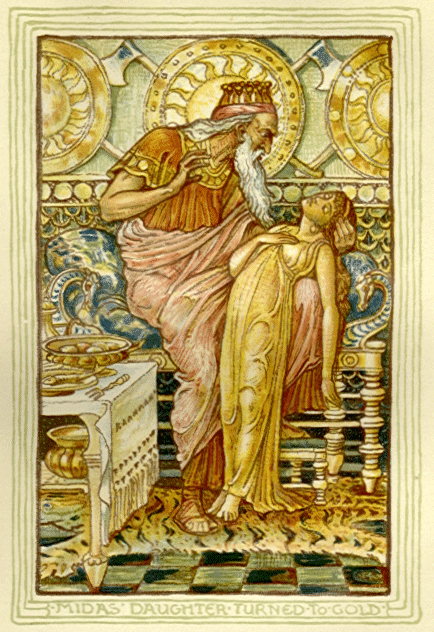
Antigone, the sister of Polynices, heard with indignation the revolting edict which consigned her brother's body to the dogs and vultures, depriving it of those rites which were considered essential to the repose of the dead. Unmoved by the dissuading counsel of an affectionate but timid sister, and unable to procure assistance, she determined to brave the hazard and to bury the body with her own hands. She was detected in the act, and Creon gave orders that she should be buried alive, as having deliberately set at nought the solemn edict of the city. Her love, Haemon, the son of Creon, unable to avert her fate, would not survive her, and fell by his own hand.

Antigone forms the subject of two fine tragedies of the Grecian poet Sophocles. Mrs. Jameson, in her Characteristics of Women, has compared her character with that of Cordelia, in Shakespeare's King Lear. The perusal of her remarks cannot fail to gratify our readers.

The following is the lamentation of Antigone over OEdipus, when death has at last relieved him from his sufferings:

"Alas! I only wished I might have died
With my poor father; wherefore should I ask
For longer life?
Oh, I was fond of misery with him;
E'en what was most unlovely grew beloved
When he was with me. Oh, my dearest father,
Beneath the earth now in deep darkness hid,
Worn as thou wert with age, to me thou still
Wast dear, and shalt be ever."

Tuesday, April 14, 2009

Anzu - the first Dragon in Mythology

Have you ever been curious about the first Dragon in history? Where it was from, did it have a name? I know I was. I also realized that I would have to settle on the first Dragon in recorded history. Since time travel still eludes me. That is when I decided to do a little surfing, well, a lot of surfing and a lot of reading, as it turned out. Yes, I even hit the hard copy.

At first I was instantly gratified, as I'm sure many have been before me. A lot of web sites that I went to all told me the same... my quest was over...it was Anzu of Babylon, a.k.a Zu, c.1st Millennium B.C. From "Ninurta vs. Anzu" or "The Myth of Anzu". I read the descriptions, and with the exception of a few minor variations, it was this: Body and head of a lion, wings of an eagle (I didn't realize they had eagles in Babylon), razor sharp talons, the beak of a bird with teeth, and an armor-plated breast. It to me was a bit of a let down. I don't know about you, but to me Anzu sounds more like a griffin than a dragon. As I'm sure you will agree from the Babylonian depiction to the right. I also noticed a lot of copy and paste activity between a lot of the sites. So I decided to take a closer look, and actually read the original story as translated from the Babylonian clay tablets. At no time is Anzu referred to as a dragon. In other Babylonian text it is actual referred to as the Anzu Bird. In Sumerian text of the 3rd Millennium BC, Anzu was known as, the Zu-bird, a mythological creature which at times wrought mischief. From - Gilgamesh, Enkidu and the nether world - (Sumerian) : "In its branches, the Anzu bird settled its young." So, as far as the Babylonians and I are concerned, not only is Anzu not the first dragon, but not a dragon at all, and deserves no further mention. I did feel I was on the right trail though, so I pushed on into deeper study of Babylonian text.

My Reading and the views in other web sites brought me to an older "Dragon" in Babylonian and Assyrian text, Tiamat, creator of the gods and earth. c.2nd Millennium B.C. From the "Enuma Elish" or "The Seven Tablets of Creation". The fact that Tiamat was a dragon is not clear. In fact she has about as many detractors as she does supporters. She is often described as a Serpent type Water Dragon. Except for that fact that she was said to have given birth to dragons, along with a host of other creatures:

"She set up vipers and dragons, and the monster Lahamu,

And hurricanes, and raging hounds, and scorpion-men,

And mighty tempests, and fish-men, and rams;

They bore cruel weapons, without fear of the fight.

Her commands were mighty, none could resist them;

After this fashion, huge of stature, she made eleven [kinds of] monsters."

The descriptive evidence in the tale leaves one wondering to the fact of her being a dragon. She is in fact called a woman in the text, and mention is made of her lips. The following are all the pieces of description contained in the text of the Enuma Elish for Tiamat:

First: (Tablet 1)

unto Tiamut, the glistening one

Next: (Tablet 2)

Tiamat, who is a woman, is armed and attacketh thee.

... rejoice and be glad;

The neck of Tiamat shalt thou swiftly trample under foot.

... rejoice and be glad;

Next: (Tablet 4)

But Tiamat... , she turned not her neck,

With lips that failed not she uttered rebellious words:

Next: (Tablet 4)

Tiamat opened her mouth to its full extent,

Next: (Tablet 4)

He seized the spear and burst her belly,

Next: (Tablet 4)

And the lord stood upon Tiamat's hinder parts

Tiamat a dragon? I leave that to you. I myself do not find enough evidence in the old text to support the fact, but likewise I do not find enough to dismiss her. But, as for being the first dragon, that I can dismiss. (For those of you who enjoy Creation Myths though, her story is the first Creation Myth in recorded history!)

I was scratching my head. Here I was deep in the world that the Greeks called Mesopotamia, home of the Babylonians and Assyrian, the birth place of civilization, and writing, but where was my dragon! That's when I smacked myself in the head. The region may have been the birth place of writing, but it wasn't the Babylonians or the Assyrian that were the parents, they were but meir students...of the Sumerians! Mesopotamia, was originally Sumeria for over two thousand years! So I head for Sumeria!

And that's where I found it! The First Dragon written of, and the first dragon slayer story, and in the first written language Cuneiform!

KUR

Sumeria 3rd Millennium B.C.

"Since the dragon-slaying theme was an important motif in the Sumerian mythology of the third millennium B. C., it is not unreasonable to assume that many a thread in the texture of the Greek and early Christian dragon tales winds back to Sumerian sources."

Samuel Noah Kramer, Sumerian Mythology, 1944

"Samuel Noah Kramer spent most of his life studying this literature, by piecing together clay tablets in far-flung museums."

Sumerian Mythology, 1944, revised 1961

We find mention of Kur in three myths from the 4th - 3rd Millennium B.C., (more than a millennium before Tiamat!), In the introductory prologue to the epic tale "Gilgamesh, Enkidu, and the Nether World,"( written on eight tablets - seven excavated in Nippur and one in Ur), Where Enki, the water-god, fights Kur after he learns that The goddess Ereshkigal was carried off violently into the nether world, by Kur. Enki fought Kur from a boat, and Kur fought back savagely with stones of all sizes, and attacked Enki's boat with the primeval waters which it controlled. Unfortunately for us, the author of this tale is so anxious to proceed with the Gilgamesh tale that he doesn't finish the dragon part, and leaves us hanging. It is certain that Enki wins though because he is in the rest of the poem, Kur is not.

See anything familiar; Damsel in distress, knight comes to the rescue and slays the dragon.

The second version of the slaying-of-the-dragon myth can be found in "The Feats and Exploits of Ninurta." (49 tablets) A significant version, due to the fact that it is evident that it was utilized by the Semitic redactors in the creation of the Babylonian Creation Myth featuring Tiamat.

In this version, Ninurta, the warrior-god, is the hero of the story. His personified weapon, Sharur, kisses up to him in a drawn out speech extolling the heroic qualities and deeds of Ninurta to convince him to go after Kur, and attach and destroy him. What Sharur has against Kur is not written in the text that is available. Ninurta leaves to do as asked, but finds himself lacking and "flees like a bird". Sharur though, won't let it go and speaks, reassuring and encouraging Ninurta with his words. "Ninurta now attacks Kur fiercely with all the weapons at his command, and Kur is completely destroyed."

Things fall apart after that. The primeval waters of the nether world which Kur had been in control of rise to the surface so violently that no fresh water can reach the fields and gardens. The gods of the land in charge of irrigation and cultivation, are desperate. The Tigris does not flood as usual, and the river water is unfit for use.

"Famine was severe, nothing was produced,

The small rivers were not cleaned, the dirt was not carried off,

On the steadfast fields no water was sprinkled, there was no digging of ditches,

In all the lands there were no crops, only weeds grew.

Thereupon the lord sets his lofty mind,

Ninurta, the son of Enlil, brings great things into being."

Ninurta then piled up stones over the dead body of Kur, and kept piling them until he had a great wall in front of the land. The wall blocked and held back the raging primeval waters (mighty waters) stopping the waters of the lower regions (nether world) from rising to the surface of the earth. Ninurta gathered up the waters that had already flooded the land and lead them into the Tigris. Which can now over flow and water the fields.

"What had been scattered, he gathered,

What by Kur had been dissipated,He guided and hurled into the Tigris,

The high waters it pours over the farmland."

The third version of the slaying-of-the-dragon myth can be found in "Inanna and Ebih." A one hundred and ninety line poem. (12 tablets)

The dragon-slayer in this version of the story is a goddess, Inanna, curiously known as both the goddess of love and also as the goddess of battle and strife, (She must have been married), and is also referred to in many Sumerian hymns as "The Destroyer of Kur." Kur, is also referred to as The 'mountain,' in the Poem. Did I mention that Kur was also the first fire breathing dragon?

It, the poem, begins with a long passage that extolls the virtues of Inanna. It is followed by a long speech by Inanna to An (the leading deity of the Sumerian pantheon.) (by the third millennium. B. C. though, Enlil, the air-god, had already taken Ans place. Placing this in the forth millennium B.C.) The meaning of her speech is sometimes hard to understand, her attitude is clear though; Either Kur, who appears unaware of, or perhaps is oblivious to, her power, glorifies her virtues, and becomes submissive, she will do violence to the monster. This is part of her threat:

"The long spear I shall hurl upon it,

The throw-stick, the weapon, I shall direct against it,

At its neighboring forests I shall strike up fire,

At its . . . I shall set up the bronze ax,

All its waters like Gibil (the fire-god) the purifier I shall dry up,

Like the mountain Aratta, I shall remove its dread,

Like a city cursed by An, it will not be restored,

Like (a city) on which Enlil frowns, it shall not rise up."

An responds by giving her a detailed account of all of Kurs mischief that he has wrought against the gods:

"Against the standing place of the gods it has directed its terror,

In the sitting place of the Anunnaki it has led forth fearfulness,

Its dreadful fear it has hurled upon the land,

The 'mountain,' its dreadful rays of fire it has directed against all the lands."

An continues with a description of Kurs power and wealth, and warns Inanna against attacking it. But Inanna doesn't listen to Ans discouraging speech. Filled with anger and wrath she opens the "house of battle" she leads her weapons and aids and attacks and destroys Kur. She then stations herself upon Kur, and utters a paean of self-glorification.

So there you have it, the first dragon in recorded history, given to us by the sumerians.

From the book Sumerian Mythology:

"The Sumerians were a non-Semitic, non-Indo-European people who lived in southern Babylonia from 4000-3000 B.C.E. They invented cuneiform writing, and their spiritual beliefs influenced all successive Near Eastern religions, including Judaism, Christianity and Islam."

In closing let me say that the Sumerians gave us writing, they gave us culture, but most of all they gave us dragons. We should give them a moment of silence.


Wondjina

In Aboriginal mythology, the Wondjina (or wandjina) were cloud and rain spirits who, during the Dream time, painted their images (as humans but without mouths) on cave walls. It has been said if they had mouths, the rain would never cease. They also lacked limbs and had a skull-like face. Their ghosts still exist in small ponds. Walaganda, one of the Wondjina, became the Milky Way. Paintings of this style that represent the mythological beings involved in the creation of the world are called "Wondjina style".

The Aboriginal people are part of a hunting-gathering society, located in the outback of Australia. Objects found on geographical sites may suggest that this area had been inhabited as long ago as 174,000 B.C. Imagery and myth were a big part of this culture. They believed that "dreamtime" is cosmological time and is the order of the universe from beginning to end. There were ritualistic acts performed during dreamtime, which included the making of rock art. The Wandjinas have common colors of black, red and yellow on a white background. Wandjinas are believed to have made the sea, the earth and all its inhabitants. The existing rock art found, has depicted them as having huge upper bodies and large heads. Their faces show eyes and nose, but typically lack mouths. Around the heads of Wandjinas there appears to be lightning and feathers. The Wandjina is thought to have special powers and if offended, can cause flooding and intense lightning. The paintings are still believed to have special powers and therefore are to be approached cautiously.


In the culture of the Worora, Ngarinyin, and Wunumbul tribes, which make up the Mowanjum community outside Derby, Western Australia, the Wandjina is the supreme spirit being.

The tribes came together early this century at the Kunmunya Presbyterian mission and the government settlement at Munja. Since 1950, they have endured many forced moves, first to Wotjulum, then to the old Mowanjum site and, finally, to the present day Mowanjum site about 15 kilometres outside Derby.

As with most complex cultures, opinions about creation can differ. According to David Mowaljarlai (dec), a highly respected Mowanjum elder, the Worora, Ngarinyin and Wunumbul people are the three Wandjina tribes. Only these three tribes see the Wandjinas as the true creators of the land. Many other Australian Aboriginal tribes believe that the Dreamtime snake or Rainbow Serpent was the main creative force.

According to Mowanjum artist Mabel King, during Lai Lai (the creation time), Wallungunder, the "big boss" Wandjina, came from the Milky Way to create the earth and all the people. These first people were the Gyorn Gyorn – what some gudiya (white) people call Bradshaw figures, named after the gudiya to first see them in 1891. The Gyorn Gyorn had no laws or kinship and wandered around lost.

Wallungunder saw that he could do good with these people, so he went back to the Milky Way and brought many other Wandjinas with the power of the Dreamtime snake to help him bring laws and kinship to the Gyorn Gyorn people. The Dreamtime snake represents Mother Earth and is called ungud. Each of the artists has his or her own ungud birthplace or dreaming place.
The Wandjinas created the animals and the baby spirits that reside in the rock pools or sacred ungud places throughout the Kimberley, and continue to control everything that happens on the land and in the sky and sea.

Sam Woolagoodja (dec), a distinguished and eminent Worora leader and law man, described the Wandjina image by saying 'their power is so great that they don't need to speak, so they have no mouth. Their eyes are powerful and black, like the eye of a cyclone. The lines around a Wandjina's head can mean lots of things – clouds, rain, lightning. The Wandjinas, he said, painted their own images on the cave walls before they returned to the spirit world.'
In addition to being the sole holder of many sacred laws, one of Sam's most important responsibilities (and one that now belongs to his son, Donny) was the upkeep and repainting of hundreds of Wandjina cave images along the Kimberley coast. This ensures that the Wandjinas' power remains strong.
Almost 20 years ago, David Mowaljarlai told local Derby District High School art teacher Mark Norval that the elders were very worried about the young people forgetting about the Wandjinas and their true homelands. "They should build a big place out of rocks, like a cave, at Mowanjum and we should do paintings all over those rocks to teach all the kids about our culture," he said.
Today, through the efforts of the Mowanjum elders and artists and many dedicated local people and businesses, the Wandjina culture is not being lost. Rather, as the artists continue to paint and the Mowanjum children begin to rediscover their own beliefs and heritage, the culture is evolving.

Thanks to the generosity of the Mowanjum people, the world now has the opportunity to learn about one of the oldest and most powerful images in Aboriginal art and the stories that have been passed on for more than 100 centuries.


source 1 2

Monday, April 13, 2009

The Carnac Stones

A dramatic battle is raging over the future - and the soul - of the conglomeration of neolithic standing stones at Carnac in Brittany, the largest site of its kind in the world. A coalition of amateur archaeologists, small farmers, environmentalists and Breton nationalists, led by a folk musician and a round-the-world yachtsman, has seized control of the central group of Carnac menhirs, or standing stones.

The 3,000 hunks of granite, erected 6,000 years ago (or more) in rows spread over two and a half miles, form a vast monument to the mysteries of early humanity, comparable in importance to Stonehenge. The protestors fear that the site's owner - the French state - plans to turn them into a theme park, or what they call a "Menhirland". The state accuses the protesters of having desecrated the place they love.

Since 1991, the principal groups of Carnac stones have been fenced in by ugly, green-mesh enclosures, similar to the controversial barrier erected around Stonehenge. Three weeks ago, the protesters stormed the main visitor centre, found the keys to the fences and threw all the stone alignments open to the public for free (to the delight of tourists).

French government officials have now recaptured and padlocked two of the three main groups of stones. But they say that the protesters have already caused permanent damage to the site by allowing tourists to wander among the menhirs at will.

Nonsense, say the demonstrators, who still hold the visitor centre and access to Kermario, the most central group of neolithic alignments. They say that it was the state that damaged the site by its misguided management in the 1980s (including using bulldozers to move stones around).

If Paris cares about the menhirs, they asked, why has it allowed scores of other groups of stones in the Carnac area - there are 80 sites and over 14,000 stones within a 10-mile radius - to fall into ruin? Why has the state changed its zoning rules to permit development near the main alignments, while trying to evict small farmers who have co-existed with the stones for years?

"They have plans, only half-disclosed, to commercialise the stones," said Eugène Riguidel, 62, a round-the-world yachtsman and environmental activist, who is vice-president of Menhirs Libres, the group leading the protest.

"They want to clear residents away from the site, make it antiseptic, build a large, paying car park and visitor centre and then probably hotels. We want the stones - all the stones - to be cherished, to be protected, but not to be fenced in with enclosures which destroy the beauty and atmosphere of this magical place."

The French government says that "Menhirland" is a myth. The site was fenced because unrestricted access by one million visitors a year was destroying vegetation and threatening to destabilise the stones. Officials say the government's plan, published in 1996 (and rejected by 87 per cent of local people) aims to restore the site's grandeur, not to turn it into a theme park.

Christian Obeltz, 40, a folk musician and amateur archaeologist, who is the other vice-president of Menhirs Libres, retorted: "If they really cherish the stones, why is there such a tiny sum in their plans [£15,000] for archaeological exploration to try to understand who built the alignments and why?"

Astonishingly, there has been little thorough exploration of Carnac since the pioneering work of the Scottish archaeologist James Miln in the 1860s, who carried out extensive excavations in the area.

At that time, fewer than 700 of the nearly 3,000 stones at the main Carnac sites were still standing. Early photographs and drawings suggest that parts of today's neat alignments may be incorrect. They were originally more haphazard. Also, it appears that some of the stones were re-erected upside down.

Others were quarried in the 1930s to fill gaps in the lines. Some were shifted to make way for roads. A few, scandalously, were shoved into new positions, to make way for the ugly fences in 1991.

"There is a huge amount of work that needs to be done to understand the site and restore its integrity," Mr Obeltz said. "Otherwise, we will just be selling the tourists myths and legends and a simplified, regularised Carnac, something which fails to comprehend the real immensity and mystery of the place."

The battle of Carnac has settled, for the time being, into a typically French stand-off. The French authorities show no willingness to evict the protesters from the site. Nor have they shown any intention to listen to their criticism.